If your kitchen sink seems to clog even when you think you’re doing everything right, you’re not alone. Kitchen drain clogs are one of the most common service calls plumbers get — and many of the real causes aren’t what most homeowners suspect.
In this article, we’ll break down the most likely reasons your sink keeps clogging, how to identify the true culprit, and what you can do to stop it for good.
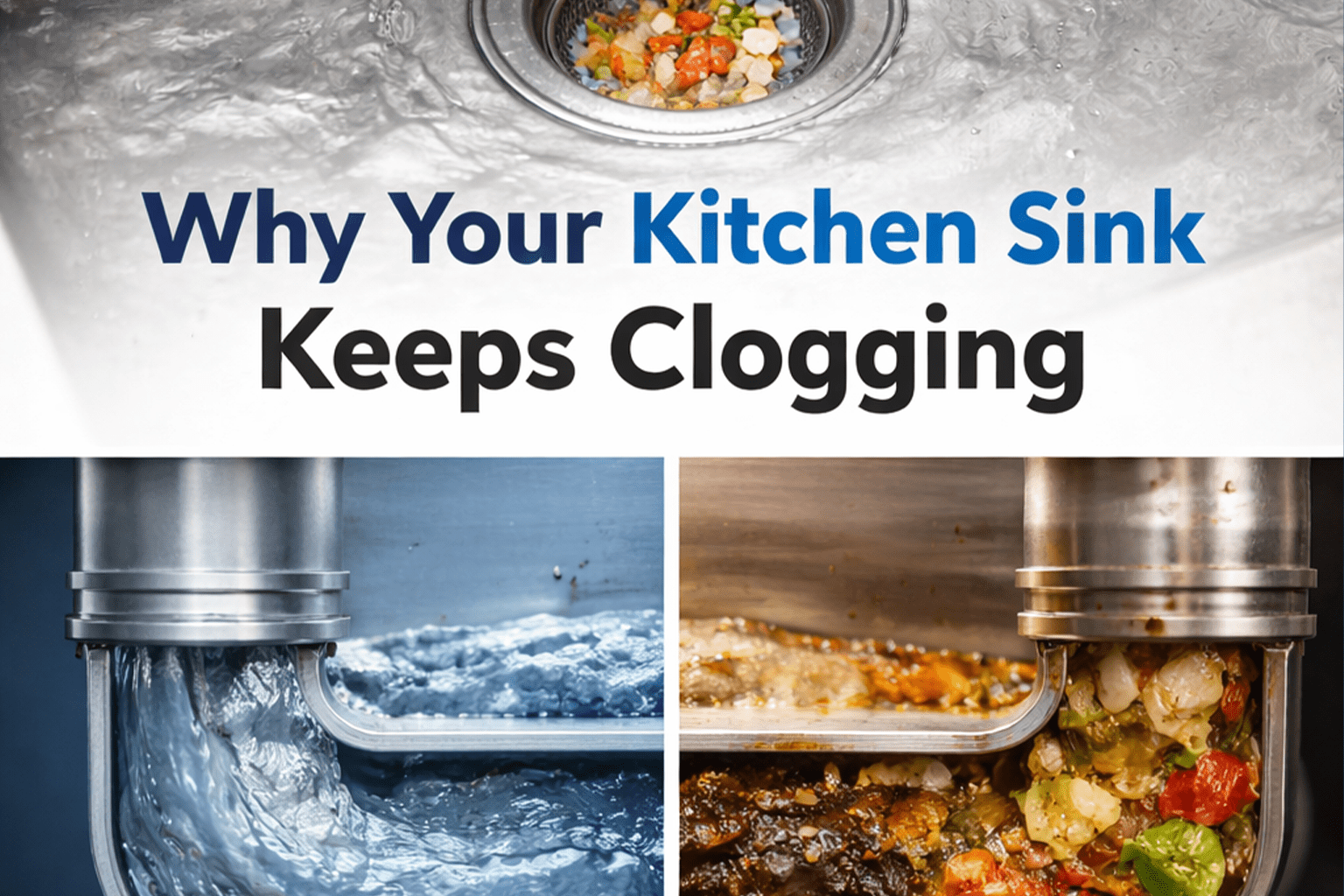
1. Grease, Oils & Food Waste That Never Fully Washes Away
Even small amounts of grease poured down the drain can:
- Solidify as it cools
- Adhere to pipe walls
- Trap food particles
- Form sticky buildup that grows over time
You might think you’re being careful, but even rinsing with hot water doesn’t completely prevent grease buildup.
2. Starchy Foods Can Turn Sticky Inside Pipes
Certain foods that seem harmless can actually cause major blockages:
- Potato peels
- Rice
- Pasta
- Oatmeal
- Flour
These can swell with water and bind to other debris.
3. Faulty or Missing Sink Strainers
Kitchen sink strainers are inexpensive, but when they’re missing or damaged:
- Food waste falls into the drain
- Debris goes deeper into the trap
- Clogs form faster than you think
A simple strainer can eliminate 80% of common blockages.
4. Trap Sediment and Hair Build-Up
Under the sink is a P-trap — and over time:
- Sediment accumulates
- Slime forms from food breakdown
- Particles catch on residue
This slows flow and eventually blocks the drain.
5. Garbage Disposal Misuse
Garbage disposals help — until they’re overloaded.
Common mistakes include:
- Running large amounts of waste at once
- Feeding fibrous materials like celery
- Not running enough water through the unit
Even machines can clog internally, causing backups.
6. Grease and Soap Scum Bonding Together
Soap and dish detergent mix with grease to create sticky “globs” that adhere to pipes and trap particles — which means clogs can form even without a large single item.
7. Partial Sewer or Main Line Issues Downstream
Sometimes the kitchen sink is the first warning sign of a deeper blockage:
- Sewer line roots
- Cast iron pipe deterioration
- Main drain line buildup
- Shared waste line congestion
If multiple fixtures are slow — not just the kitchen — it might be more than just a kitchen clog.
How to Tell Which Problem You Have
Quick tests:
- Does multiple fixtures drain slowly? → Possible sewer issue
- Does water back up when running dishwasher? → Trap or disposal issue
- Is the sink slow after big meals? → Grease / food buildup
Camera inspection and professional drain cleaning can pinpoint the exact cause without guesswork.
Prevention That Actually Works (Not Myths)
Common Home Trick Reality
Hot water flush Only temporarily moves grease
Baking soda & vinegar Not reliable for real buildup
Chemical drain cleaners Can damage pipes over time Professional hydro-jetting Safely clears buildup from inside pipes
Best prevention:
✔ Use a good strainer
✔ Avoid grease down the drain
✔ Run hot water with disposal
✔ Schedule periodic professional inspections
When to Call a Plumber
You should call a professional if:
✔ Multiple fixtures are draining slowly
✔ Water backs up into other areas
✔ Sink repeatedly clogs soon after cleaning
✔ You smell foul odors
✔ DIY methods aren’t working
Final Thoughts
Kitchen sink clogs are rarely just “bad luck.”
They’re usually a buildup of several factors — and the longer you wait, the harder they are to fix.
A professional inspection and drain cleaning not only clears the problem, it protects your pipes, prevents costly repairs, and keeps your home operating smoothly.